
Toward an aesthetic of progress
Our values will shape our work

This essay directly follows my previous post on the aesthetics of the progress movement, and concludes a series of thoughts I’ve been mulling since attending the Progress Conference last October. I’ll recap the series at the end of this post. If “progress” essays aren’t your favorite, fear not, I’ll shift back to more “cities” and “parenting” content for a while after this.
In my last piece I critiqued mid-century retro-futurism as an aesthetic of progress, and concluded that:
…the progress movement will ultimately need to discover a new aesthetic of progress for the 21st century; one that learns from the mistakes of the past, speaks to the hopes and fears of the present, and presents a credible vision of a genuinely better future we can achieve without erasing the past.
And discover is the right word. We’ll have to decide what we believe in, beyond simple optimism, or openness to technology and change. We’ll need to find the shared values that unite us. Then the aesthetic of progress will emerge, over time, from the work of practitioners aligned to those values.
Today I’ll share what values should guide the progress movement, and point to work that illustrates how those values are expressed aesthetically.
As I wrote in my last essay, when people project images of the future, they’re telling us what they want, what they fear, and what they expect. They want to live in a verdant future with meaningful work and rich community life. They fear civilizational decline caused by environmental collapse, hypercapitalism, or both. They expect to muddle through a world of better technology that’s nevertheless ever more alienating and lonely.
These hopes and fears are not concrete policy or technical concerns, but broad expressions of experiences and values.
The progress movement seeks to cultivate a culture of progress, a broad belief that progress is possible, and enthusiasm to join the work. To achieve that goal, the movement needs to align around resonant valuesthat can guide its work.
Now, you may wonder, are we still talking about aesthetics? Yes, because aesthetics embody values. The work we do will look and feel like something, and that something will be the result of the values we hold. Work tests us and forces us to make hard decisions; what we ultimately choose will reflect and express the values we hold highest. So the arrow points both directions: thinking about aesthetics means thinking about our values, and thinking about our values means thinking about our aesthetics.
I see five values that to guide the progress movement: Continuity, Locality, Truth, Beauty, and Accessibility. These are principles that learn from the mistakes of the past, and respond to the hopes and fears of the present. Below, I’ll make the case for each value and provide examples of work that expresses it.
Continuity
Continuity is the most important clarifying principle for the aesthetics of progress. We understand progress as a change from worse to better. We’ve moved from A to B. If there is no “A,” then “B” is not progress; it’s just novelty. We cannot create worlds from nothing, therefore dreaming of “B” without “A” is fantasy.1
While fantasy can be interesting, even inspiring at times, it’s far more powerful to project and work toward a vision of the future that people can actually see themselves living in. By contrast, when we think from a blank slate, we’re ignoring the people of the present, their needs, and their problems. Continuity as a value means including them and working toward a better future that they can recognize as their own.
Continuity can also mean seeking to learn from and build upon the best of the past, rather than always starting from first principles.
Examples
The composer Christopher Tin is firmly rooted in the classical tradition, but at the same time, he’s innovative and original. He writes both choral oratorio and scores for video games. For the progress movement, the content of his work is also compelling. Consider “To Shiver the Sky, which celebrates our history of flight, while “The Lost Birds” mourns species loss.
Another recent example of continuity is Sir Jony Ive’s work on the design of the Ferrari Luce.


Ive and his team sought to combine the most powerful parts of analogue and digital displays. The design emphasizes tactility, so the driver doesn’t need to look away from the road to operate the controls. They even made the various controls sound distinct, so you can be sure you hit the switch you intended without looking.2
Locality
Humans are not global creatures of the mind. We are physical, spatial beings with finite limits. We can only be where we are, and meaningfully know roughly 150 other people. We want to love and be loved by people in proximity.
We want to be treated like people by the businesses and institutions around us, not as numbers in a database. People grumble about “nameless” and “faceless” corporations but love their local brewery.
Progress needs a healthy dynamism — a shared big picture with local distinctiveness we can personally identify with. Think of baseball, a national pastime and cultural common ground with fiercely local loyalties. You can get a hot dog at any stadium, but only the Rangers offer Dr. Pepper Bacon on a Stick. That “layered” experience pulls far more people in and creates diversity we celebrate.
Examples


Lake Flato Architects’ work incorporates both modern design and traditional vernacular inspiration. They’ve helped popularize modern designs utilizing a blend of limestone masonry and corrugated steel that draws from local materials and history, and has become the distinctive style of the Texas Hill Country.


Brad Lancaster lives in Tucson, Arizona, where the average annual rainfall is only about 12 inches. In that context, most generic development leaves the landscape barren, as it’s designed to quickly drain water away and send it downstream. But with simple adjustments to harvest the rain, Brad’s projects transform the desert environment into a verdant oasis.
Truth
Truth matters to progress in both a timely and a timeless sense. In a timely sense, our culture is dominated by a relativistic worldview that suggests things actually can’t be objectively better or worse.3
In a timeless sense, there is only progress if we can objectively evaluate real, net improvement in things that matter. Thus, the progress movement should be concerned with truth, both in the epistemic sense (that we can actually know whether things are better) and in the practical sense (that we actually achieve meaningful improvement).
There’s an opportunity to express truth in our work, and when we do, it resonates. We’re surrounded every day by things that are fake and tacky; when we see things that are real and true, we notice.
Examples
Building Culture is a development and construction led by Austin Tunnell. They specialize in building with masonry — bricks that are actually structural, rather than just a veneer. You don’t have to be an expert to perceive the difference.


Writing for Southern Urbanism, he illustrated this point so beautifully with the case of concrete flooring systems, which can be made simpler and cheaper when designed to work in compression, following the natural strength of the material.4
And the result is visually striking.
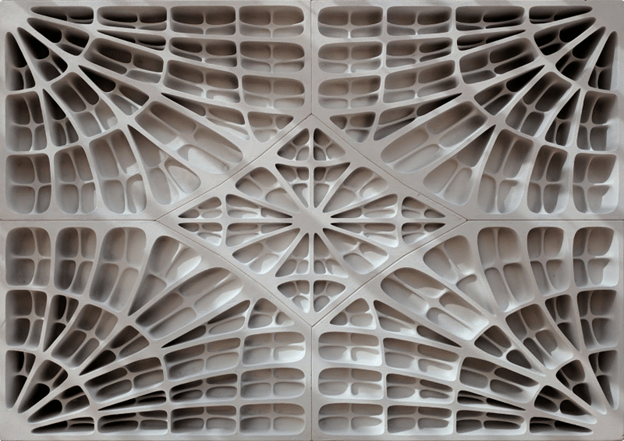
Another example is the advance of Mass Timber construction. Wood is, in many ways, the most versatile building material, and it’s also a natural carbon sink.
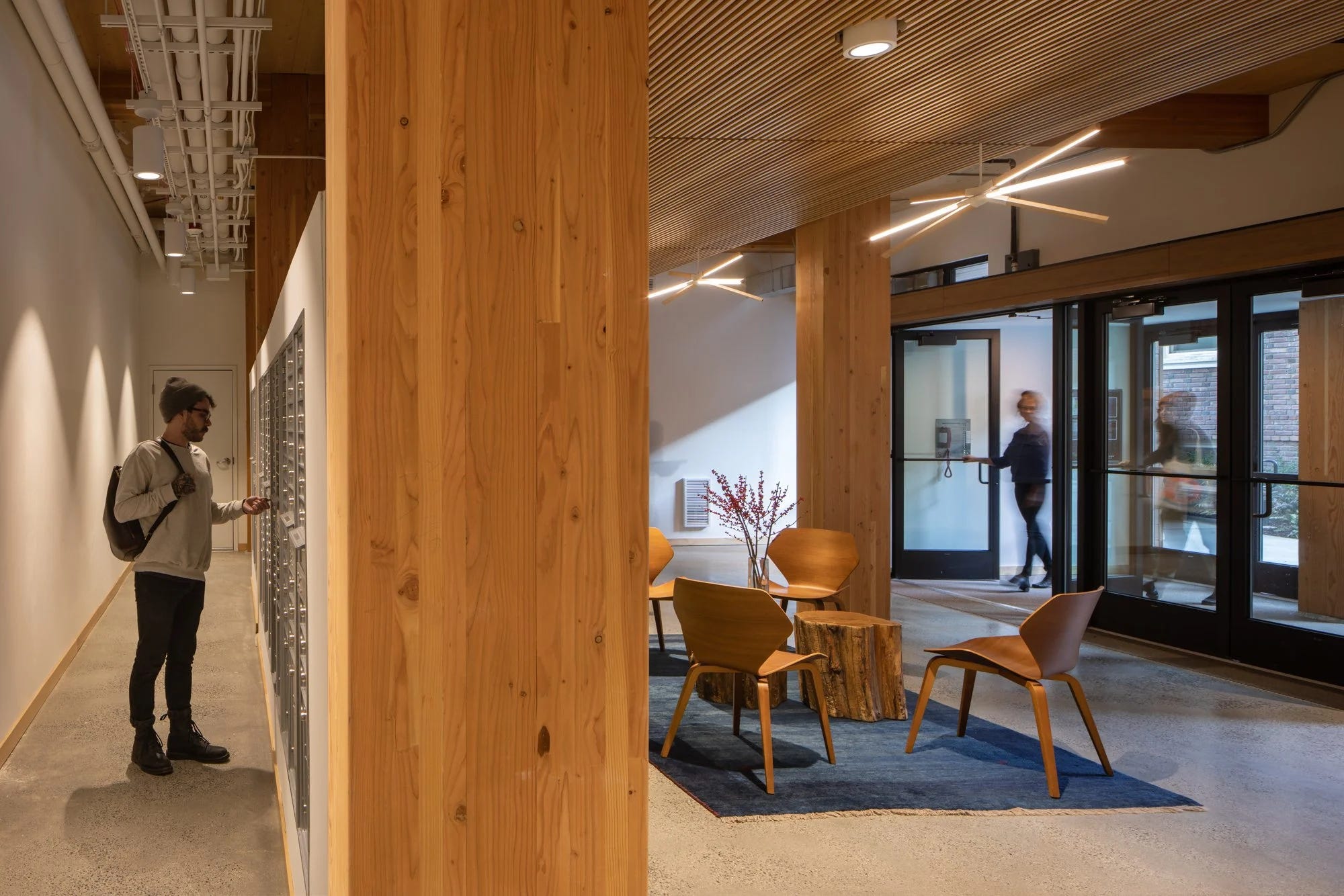
Projects like the Heartwood affordable housing project in Seattle have leveraged mass timber to construct lighter buildings that can be partially pre-fabricated and then assembled on site, resulting in quicker and less disruptive construction. When complete, the warm, natural feeling of the exposed structure becomes a selling point.
Beauty
Just as there is truth, there is durable, timeless beauty that transcends subjective opinion, fashion, or style. Study The Elements of Typographic Style, A Pattern Language, or The Photographer’s Eye, and you’ll find common elements of composition and proportion that come naturally to people, can be refined with practice, and consistently produce beauty.
Beauty matters because humans have a natural, positive response to it. Children learn more in beautiful classrooms. Workers are more productive in beautiful offices. Patients heal faster in beautiful hospital rooms.
Closely related to beauty are experiences of awe and wonder. Our sense of wonder cultivates curiosity and hope. And at the grandest scales, experiences of awe make people happier and more pro-social.
An explicit goal of Progress should be to be beautiful — both because it draws people in and inspires them, and because beauty is good for us. The entire point of Progress is to make life better.
Examples
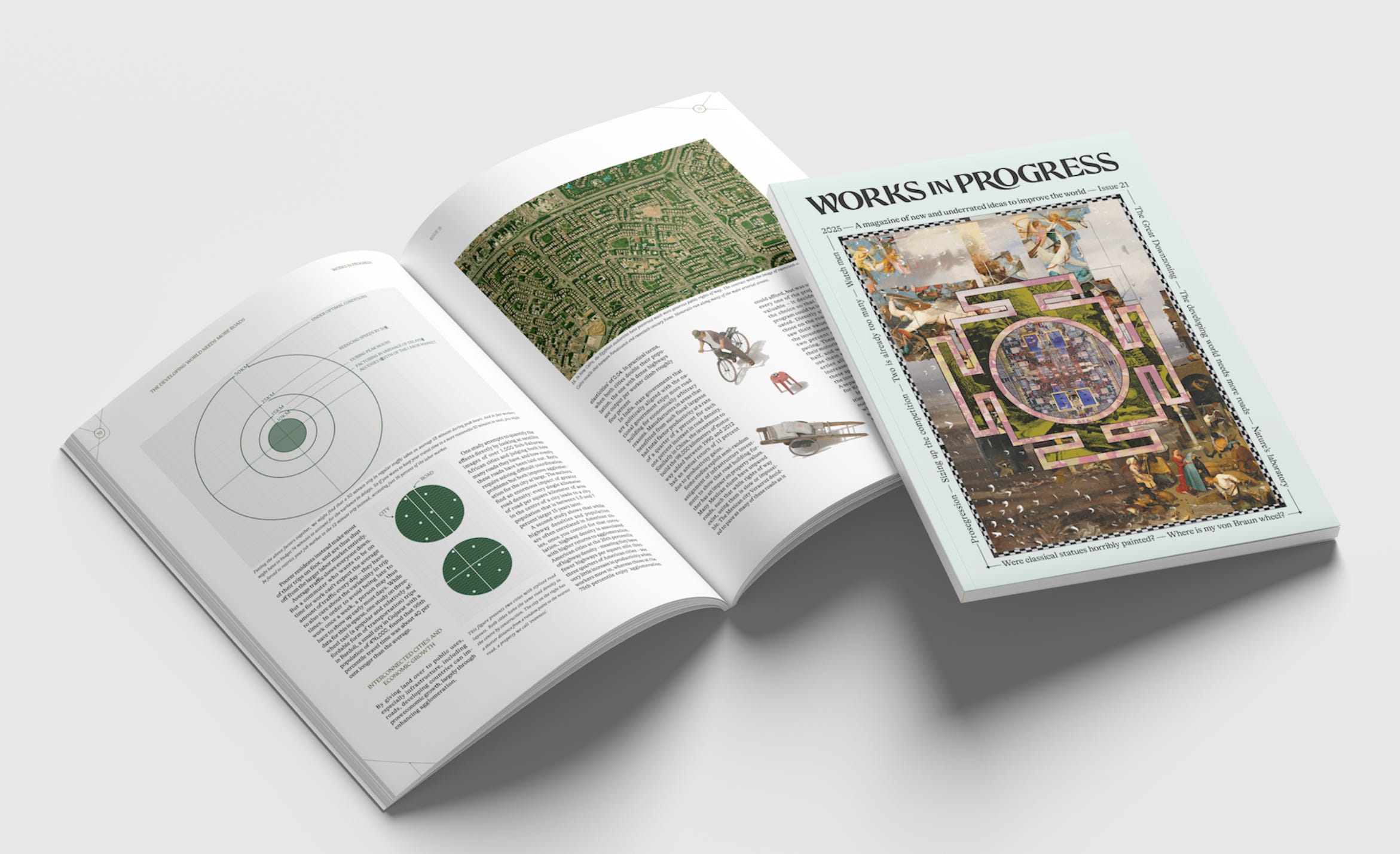
Works In Progress magazine, a hub of ideas from and for the progress movement, invests in beautiful illustrations and typography, and the artistic quality of the work makes the content read as more credible. As I’ve critiqued the mid-century aesthetic as not the best fit for the progress movement, I think it’s worth pointing out that Works In Progress leans more toward Art Nouveau, especially in their print edition.5


Monumental Labs pairs advanced robotics with skilled artisans to dramatically reduce the cost of fine sculpture and architectural stonework, and their stated goal is to unleash a “golden age of art and architecture.” They’ve essentially made “beauty” a business. It’s worth browsing their website, which is itself an art-deco-inspired work of art.
Accessibility
Beauty is sometimes confused with luxury or exclusivity, but beauty is not exclusive. The natural world is full of beauty for everyone to experience. And while our consumer economy is full of places and products that make no effort to be beautiful, there are also many examples of companies that do try, and succeed at delivering beautiful products and experiences for the mainstream.
In our democratic society, only broad, inclusive progress will be durable. There will always be righteous anger against “the rich getting richer.” Progress is no project for the elite. It must be mainstream, mass market, and broadly accessible; we should earnestly pursue improvement for everyone.
Examples


I feel it’s so obvious that it’s almost a cliché, but I couldn’t not include Ikea as an example of accessibility. The combination of appealing design and low prices is so good that almost everyone ends up owning some Ikea.6
Their corporate brand is close to techno-minimalist, but particularly their “marketplace” selection has a much warmer aesthetic while still looking slightly futuristic.


If I had to pick a single practitioner and set of projects7 to exemplify a new aesthetic of progress, Earthscape would be my choice. Earthscape builds playgrounds that are essentially public art — or public art that you can climb on? Their visual style is distinctive and futuristic, but also earthy and organic. Seriously, go browse through their extensive list of projects and get inspired.
Conclusion
There’s more depth behind these values than I feel I can explore in a single essay, but I want to leave you space to consider:
Continuity is a correction to the high modernists’ destructive attempt to erase the past and remake the world from a blank slate.
Locality is a correction against the high modernists’ attempt to flatten the world, and, to some degree, globalization has achieved what they started.
Truth is a correction against postmodern relativism, which undermines the idea of progress itself.
Beauty is aspirational and persuasive; it helps win hearts and minds.
Accessibility is grounding; it keeps us focused on solving real problems for ordinary people.
For practitioners in the progress movement, these values can help ground and guide our work, and help us craft and communicate a credible vision of the better future we’re building toward. And if we stay rooted in shared values, then, over time, a distinct and resonant progress aesthetic will emerge.
Let me know what you think in the comments — how do these values resonate for your work, and is there anything you think I missed?
This essay is the 5th (and final) piece informed by my experience at the Progress Conference this fall. If you enjoyed this piece you might like the earlier pieces as well:
Special thanks to Mike Riggs, Benedict Springbett, Jeff Fong, Grant Mulligan, and Pam Burleson for their feedback on many, many drafts.
Kevin Kelly describes this idea as “Protopia,” that tomorrow that’s always just a little bit better than today, as opposed to “Utopia,” an unattainable (and undesirable) dream.
This example resonates for me because my current car suffers from too much touch screen, and trying to turn on the defroster while driving is rather dangerous! While Ferrari is obviously an outlier-level luxury car, I’m hopeful that mainstream cars will learn from and copy the ideas here at a reasonable price points.
Perhaps this is why so many people are pessimistic about the world around them even as they’re optimistic about their own life.
Quoting Tunnell: “On a 25-story mid-rise, if you swap out conventional reinforced concrete floor systems with one of the unreinforced systems Philippe has pioneered, it saves 1200 concrete trucks and 20km of steel in the floor system alone. That’s before accounting for the reduced weight and implications on the piers and foundation. This is unbelievable.”
And for what it’s worth, I think that’s a brilliant choice.
Or in my case, quite a lot…
Substack doesn’t allow links in the captions of image galleries… which seems like a bug to me! So here are the direct links to the Earthscape projects I featured: Pier 58, Denver Museum of Natural Science, Hidden Creek Park West.
Where are the fashion examples Andrew?
The future we should have had is Art Deco and Art Nouveau