

This was the scene throughout my neighborhood a few weeks back.
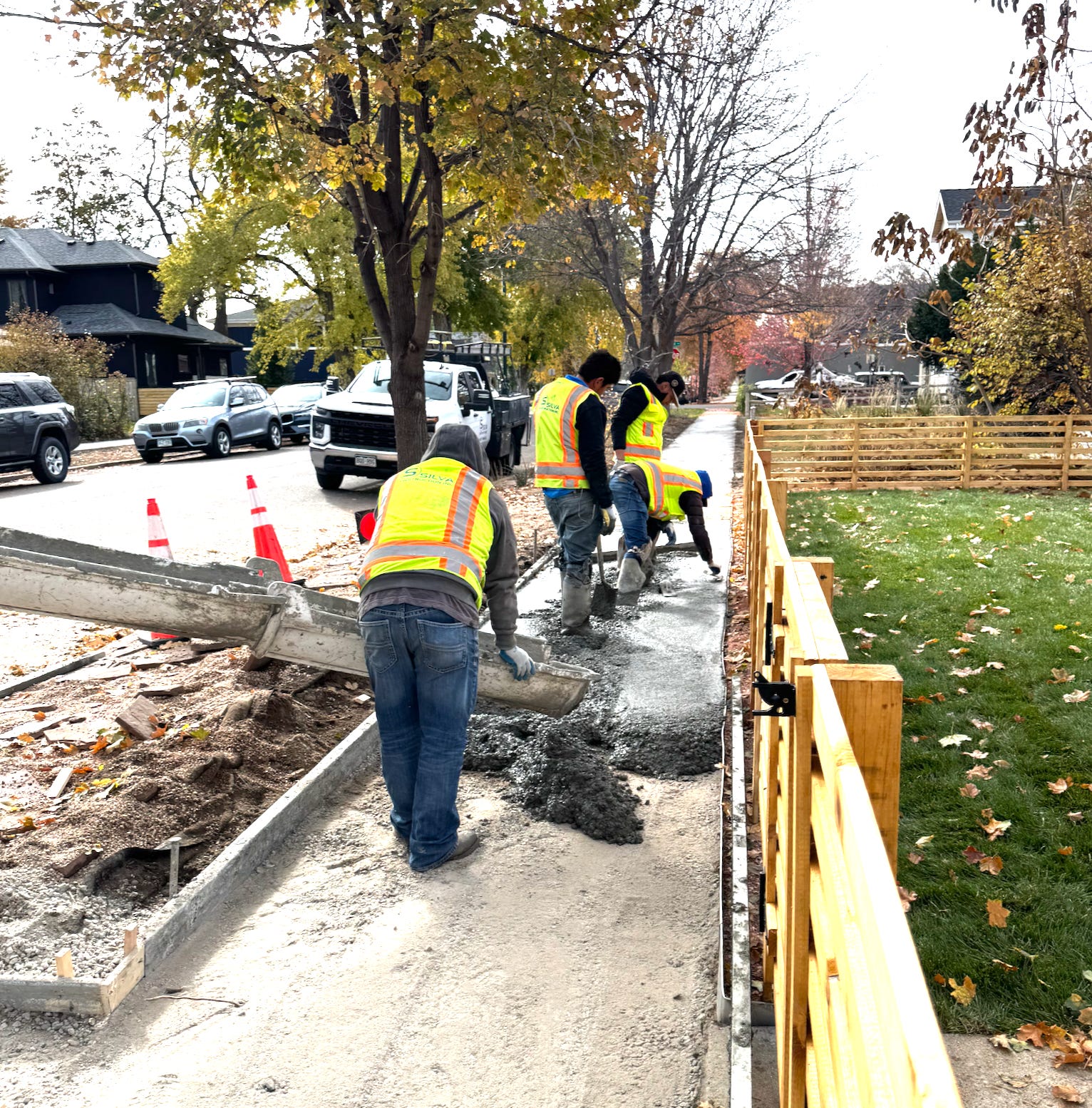
Our neighborhood’s sidewalks have been in mediocre shape for years, with a lot of cracked and uneven slabs, and even a handful of potholes. As a parent, I had to keep an eye out for all these trip-hazards when we’d walk around with the kids… it’s no fun when your toddler ends up sprawled across the concrete.
Run-down sidewalks are a pretty common problem across the country, in part because they exist in a bit of infrastructural limbo. While sidewalks are part of the right of way and obviously serve the general public, most cities expect each individual property owner to maintain their sidewalk individually. But this rarely happens because replacing concrete is difficult and expensive.
When I looked into it, just replacing a few cracked sidewalk sections in front of my house was $3,000! And while laying fresh concrete is somewhat DIY-friendly, replacing an old slab is really not.1
A few years ago, Denver voters approved a programto solve this. Most residents pay $150 per year, and the city takes full responsibility for maintaining the sidewalks.
This fall, the work crews appeared in my corner of town. They surveyed existing conditions, using spray paint to indicate which sections needed to be replaced, which ones could be leveled without replacement (grinding down small ledges, etc.), and which sections needed more careful work to deal with underlying tree roots or other complications. A few days later, the traffic cones appeared, and everyone moved their cars out of the way. The crews generally did a few block faces at a time: removing the old sidewalk with a small excavator and laying wooden forms on day one, pouring the new sidewalk sections on day two, and cleaning up on day three. It took less than two weeks to repair the entire neighborhood (about 90 blocks).
On its face, this is a pretty mundane story. City repairs infrastructure, “yawn.”
But what I didn’t anticipate is how excited everyone in the neighborhood was about this, how much it was the “talk of the town” for weeks. When the crews arrived on our block, we came out to say hello and thank them for their work. I was surprised to see most of the neighbors did the same. The kids were thrilled by the excavator and the cement truck, and the crew were all smiles as they demonstrated how it works.
The foreman told me this was one of the most fun jobs they’d ever had, that people had been bringing them snacks and drinks the whole time. You’d think that people would be grumpy about the disruption of several days of construction right in front of their homes, but instead the project was like a slow-motion community parade.
One of the hot topics of 2025 was State Capacity. Books like Abundance and Why Nothing Works had a lot to say about our inability to build enough housing, regional power lines, and commuter rail. There’s a general sense that government in America is too bogged down in vetocracy to get things done.
But the big failures at the top of the system should not be surprising in light of the dysfunction at the base. When our cities and towns can’t maintain basic infrastructure, we don’t have the foundation of institutional capacity and civic trust to do bigger things at the state or national level. Sidewalk repair is state capacity.
And for people who care about building state capacity, I think Denver’s program is a good model. Voters were asked a simple question (Do you want the city to repair sidewalks?) and they approved a new tax to fund it. The city put the program together, is doing a good job delivering, and people noticed! The next time the city puts a question to voters, they’ll be more likely to trust that the city can deliver results.
But for advocates who want to see government solve problems, it’s important to understand that state capacity starts at the local level, and there’s no shortcut to building it. We need to care deeply about maintaining our sidewalks, our drinking water, our schools, our parks, and our libraries. When we can’t do those things, we should be obsessed with figuring out what’s wrong and fixing it. With a strong foundation of high-functioning local government, we’ll have a much better chance of building effective state and national institutions.
You need a jackhammer to break up the old concrete into small enough pieces, and even in small chunks concrete is very heavy, so clearing it out is exhausting. If you’re not in shape you could easily hurt yourself doing this. Then after all that, you have to haul the old debris to the dump.
Yes, well said! Get the basics of blocking and tackling right before moving on to the razzle-dazzle plays. Trust begins at the local level and builds up.
Different story, but: in my city, there was a particular location where cyclists (including myself) always rode against traffic, because it was the most obvious path to get from an existing bike lane to another. A few years later, the city had built a bike lane there, and I remember feeling very impressed with state competence. There was an obvious solution and they just did it. (Maybe my bar is low but it's good to celebrate small wins!)